
Why did Yiyang win the "national-level" quality inspection center?
Yiyang boasts a highly competitive industry: capacitors. One in every three aluminum electrolytic capacitors in China is "Made in Yiyang". From smartphones to new energy vehicles, the stable operation of these electronic devices cannot do without this tiny component, known as "industrial rice".
However, Yiyang, honored as the "Hometown of Aluminum Electrolytic Capacitors in China", has long faced an awkward situation: as a major global production base, it lacked a matching "technical brain".
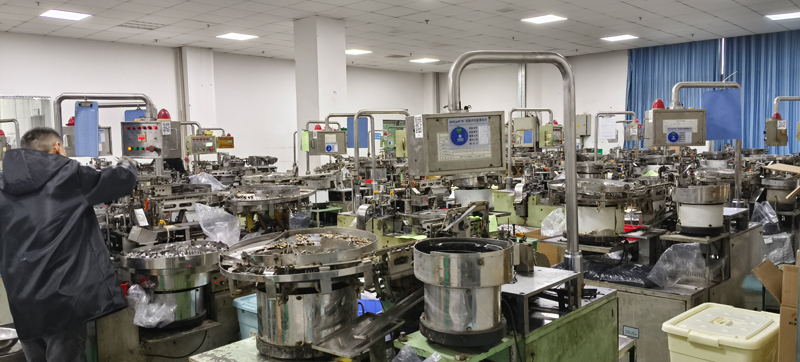
Production Workshop of Jinfuda Electronics Co., Ltd.
“If the national capacitor industry is seen as a chess game, Yiyang used to be the strongest ‘chess piece’ on the board. Now, the state has equipped this piece with a ‘brain’,” Lin Hai, President of Yiyang Institute of Supervision and Inspection for Product Quality, told a reporter from Xiaoxiang Morning Chen Video. The establishment of this center will put an end to the history of having no national-level quality inspection center for electronic components in central China, and drive Yiyang to transform from a “production base” into a “highland of technology”.
Why Yiyang? The Confidence to Shift from “Production Center” to “Technology Center”
Yiyang’s capacitor industry started in the 1970s. After nearly 60 years of development, it has formed a complete industrial chain from raw materials to module assembly. At present, the city is home to 104 capacitor and supporting enterprises, with products directly supplied to global tech giants such as Huawei, BYD, and Apple. In 2025, the output value of the industrial cluster is expected to exceed 23.4 billion yuan, accounting for more than 30% of China’s aluminum electrolytic capacitor market, firmly ranking as the world’s third-largest production base.
“The state’s decision to locate this platform in Yiyang was carefully considered,” Lin Hai analyzed. “One in every three aluminum electrolytic capacitors in China is made in Yiyang. Only by building the center next to the ‘production workshop’ can we serve the front line of the industry with maximum efficiency.”
Lin Hai noted that Yiyang not only covers the entire industrial chain from raw materials to high-end components, but its existing quality inspection center has also obtained CNAS international accreditation, with over 100 million yuan invested in relevant equipment and facilities, and a large number of scientific research patents and practical experience accumulated. “It is precisely because of such an industrial foundation and technical strength that this national-level platform could land quickly and operate efficiently.”
It is fair to say that Yiyang is not only the national “production center” for capacitors, but also has the potential and confidence to upgrade into a “technology center”. “The State Administration for Market Regulation positioned this center in Yiyang to turn industrial advantages into technological advantages, and drive the entire industry toward high-end development,” he added.
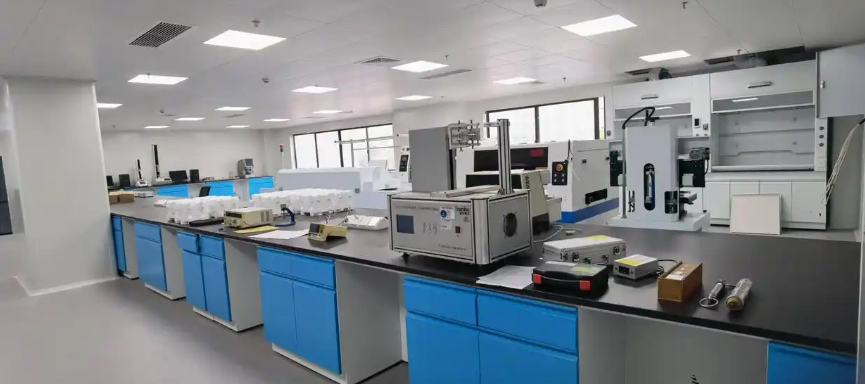
△Laboratory of Yiyang Capacitor Inspection and Testing Center.
“In the past, enterprises in central China that needed to test these items had to send samples to nationally accredited testing institutions in cities like Beijing, Shanghai, Guangzhou, Shenzhen, or Xi’an. The back-and-forth shipping consumed a great deal of time and energy. Now we have this ‘top-tier hospital’ right on our doorstep. Enterprises can come anytime to give their products a ‘physical examination’. As soon as problems are identified, they can immediately improve their processes to ensure every capacitor delivered to Huawei and BYD is ‘healthy and reliable’,” Lin Hai said.
Moreover, this “physical examination” system is closely linked to the daily lives of each one of us.
“Your phone getting so hot while charging that you can barely hold it, or a new electric vehicle showing an inaccurate range — these issues are directly related to capacitor quality,” Lin Hai explained. Poor-quality capacitors create significant internal resistance during fast charging, converting electrical energy into heat and causing the phone to overheat. In electric vehicles, substandard capacitors suffer performance degradation at low temperatures, distorting signals sent to the control chip and making drivers feel the range is overstated.
With the national-level quality inspection center now based in Yiyang, it is equivalent to having a “product quality judge” right at home, putting all capacitor manufacturers under strict supervision. “Through rigorous testing, it will keep inferior products — those that overheat, have short lifespans, or deliver exaggerated performance — out of the market. In the end, the electronic products consumers receive will be more durable, safer, and deliver more honest performance.”
Building a Scientific Benchmark for Domestic Materials Against World-Class International Products
As a technical expert, Lin Hai holds even higher expectations for the future. He revealed that following the launch of the national quality inspection center, a key focus will be achieving precise analysis capabilities for high-end nanoscale core materials.
“To put it simply, before, we only knew ‘the dish tasted good’; now we need to find out exactly why it tastes good,” Lin Hai explained. For a long time, core materials for many high-end capacitors have relied on imports, and domestic enterprises have often lacked an accurate “reference standard” during research and development.